This post is a supplemental resource for the video below:
CHALLENGE: Find 3 ways to better manage your chaos, and write them down in an easily accessible place
- Imagine your brain creates energy that can be measured with energy bars
- Neurotypical brains output ~5/10 energy bars
- Neurotypical brains can control the amount of energy bars their brain outputs
- To relax, they dial down their energy output
- ADHD brains output ~10/10 energy bars
- ADHD brains can’t control the amount of energy bars their brain outputs
- This means ADHD brains can’t dial down their energy output to relax
- Because ADHD brains are constantly outputting so much energy, this energy must be used up somehow
- If the energy is not used by you, then the brain and body will use it, which results in ADHD symptoms
- Your brain’s chaos is caused by excess energy with nowhere to go
- Chaos shows up differently in different people
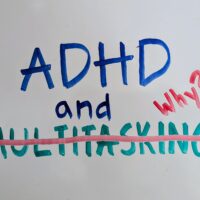
- Multitasking is using up the excess energy
- To succeed at this: Choose 1 main task + 1 side activity
- Overstimulation is when your brain has overflowed into 11/10 energy bars
- You need to reduce the input your brain is receiving to help it cool back down to regular levels
- Work with your brain, not against it!
- When in my day-to-day life would pairing a side activity with my main task help me regulate?
- What combos of main task + side activity work best for me?
- How can I tell if the combo I am using is distracting me more than helping me?
- How does “chaos” present for me?
- What are my signs that I am getting overstimulated? When I am overstimulated?
- What would it look like to work with my brain instead of against it?
- Step 1: Identify Your Current Energy Level
- Am I under-stimulated (bored, drifting, restless, etc.)?
- If understimulated, prioritize finding and using one of your task + activity combos
- Am I at my baseline/regular energy?
- Am I overstimulated (overwhelmed, irritable, sensory overload, etc.)?
- If overstimulated, prioritize reducing input
- Am I under-stimulated (bored, drifting, restless, etc.)?
- Step 2: Choose Your Main Task
- What is the one thing that I actually need to get done right now?
- What would be the first small step I would take to do this task?
- What would finishing this task look like? How would I know the task is done?
- Step 3: Pick a Side Activity
- It should be something that helps you channel your excess energy without distracting you from the main task
- Step 4: Set Up Your “Thought Parking Lot”
- Choose a place that will not distract you.
- Ex: sticky note, back of a piece of paper, empty google doc, etc.
- During the time you work on your main task, dump your intrusive thoughts and ideas in your chosen place
- Return to the main task right after writing down your intrusive thoughts and ideas
- When finished with the main task, review the list you wrote throughout the task
- Choose a place that will not distract you.
- Step 5: Use Intentional Task Switching
- Work in blocks of time, with timed breaks between them
- Switch to another task on purpose when you find yourself struggling to focus on your first task
- When you feel like you should, switch back so you can finish the first task too
- Step 6: Remember to Check In With Your Body
- Do I need water?
- Do I need food?
- Do I need to stretch?
- Do I need a break?
- Step 7: Celebrate progress, not perfection
- The small steps of progress are worth celebrating! The step does not need to be big for you to celebrate it.